 Available in US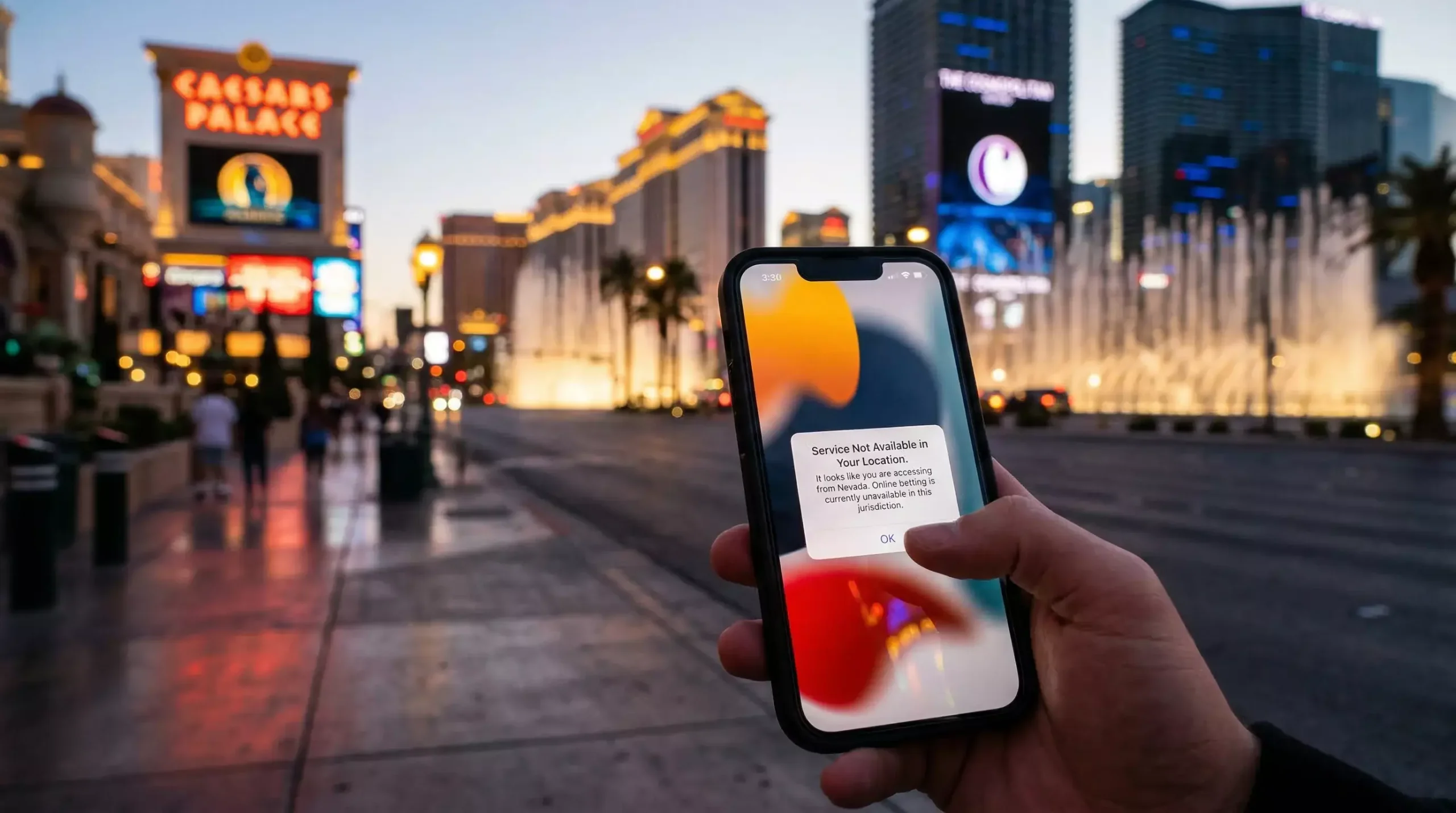
Nevada presents a paradox in the sweepstakes casino landscape. The state famous for Las Vegas casinos and the most permissive gambling laws in the country is also one of the hardest places to access sweepstakes casinos. In 2025, Nevada significantly strengthened its position by passing Senate Bill 256, which imposed severe penalties on unlicensed gambling operators—including sweepstakes casinos. Even before this legislation, sweepstakes casino operators had voluntarily blocked Nevada residents, a self-imposed restriction reflecting the unique dynamics of operating in America’s gambling capital.
This voluntary exclusion stems from the Nevada Gaming Control Board’s influence and the implicit threat of regulatory action against operators who would compete with the state’s licensed gaming industry. With SB 256 now law, operators face felony charges, fines up to $50,000, and forfeiture of all profits from illegal operations. Sweepstakes casinos have calculated that serving Nevada isn’t worth the risk of provoking one of the world’s most powerful gaming regulators. The result is that Nevada residents—surrounded by legal gambling options—can’t access platforms available in most other states.
Understanding Nevada’s approach illuminates how regulatory pressure can shape industry behavior—first through implicit threats, now through explicit legislation. As the California Senate Public Safety Committee observed in analyzing sweepstakes regulation, these operations allow “both player winnings and corporate profits to go untaxed“—concerns that resonate particularly strongly in Nevada, where the gaming industry pays substantial taxes. The state’s approach offers a model that other jurisdictions with established gaming industries might replicate.
Nevada’s Legislative Response: SB 256
For years, Nevada didn’t need specific sweepstakes casino legislation because the industry voluntarily avoided the state. This preemptive self-exclusion eliminated the regulatory problem before it required formal legal response. However, in 2025, the Nevada Legislature decided to codify this prohibition through Senate Bill 256, which passed unanimously in both chambers.
SB 256 significantly strengthens penalties for illegal gambling operators, explicitly targeting unlicensed platforms that serve Nevada residents—including offshore sites and sweepstakes casinos. According to Yogonet, the bill was introduced by Senator Rochelle Nguyen on February 27, 2025 and received strong bipartisan support. The legislation allows Nevada to prosecute illegal operators even if they are based outside the state, provided they accept bets from Nevada residents.
The penalties under SB 256 are severe. Violations are now classified as category B felonies, carrying potential imprisonment of 1 to 10 years and fines up to $50,000 per offense. The bill also mandates disgorgement of all profits, gains, gross receipts, or other benefits derived from illegal gaming operations, with these funds directed to Nevada’s General Fund.
The Nevada Gaming Control Board and Nevada Gaming Commission already constituted one of the world’s most comprehensive gambling regulatory frameworks. SB 256 didn’t create new regulatory infrastructure—it sharpened the existing tools. The legislation passed with support from the Nevada Gaming Control Board, the Association of Gaming Equipment Manufacturers, and the Nevada Resort Association.
Nevada Sweepstakes Casinos — More on this topic at sweepstakes legal.
Regulatory Pressure Dynamics
The Nevada Gaming Control Board’s reputation drove sweepstakes casino self-exclusion long before SB 256 was enacted. According to KPMG analysis, Nevada’s gaming regulators are considered among the most rigorous globally, with enforcement capabilities that operators prefer not to test. The sweepstakes casino market reached $10.6 billion in gross revenue in 2024, but operators calculated that the Nevada market wasn’t worth the regulatory risk.
Before SB 256, the Board hadn’t issued formal guidance declaring sweepstakes casinos illegal in Nevada. What it maintained was a regulatory environment where unlicensed gambling operations faced serious consequences. Operators understood that serving Nevada without a gaming license would likely be treated as unlicensed gambling, triggering enforcement actions that could extend beyond Nevada to affect operations elsewhere.
Multi-jurisdictional licensing creates additional risk. Major gaming companies operate in Nevada under strict licensing requirements that include suitability investigations and ongoing compliance obligations. These companies also have interests in sweepstakes casino operations or related businesses. Operating unlicensed sweepstakes casinos in Nevada could jeopardize their Nevada gaming licenses—a risk no major operator would accept.
The Gaming Control Board’s investigative reach extends nationally and internationally. Board investigators can pursue information about operators’ activities in other jurisdictions as part of suitability reviews. This investigative capacity creates exposure for sweepstakes operators even if they don’t directly serve Nevada—their activities elsewhere could become relevant to licensing decisions affecting their corporate parents or partners. With legal iGaming generating $8.4 billion in GGR across seven states in 2024, the stakes for maintaining proper licensing relationships are substantial.
See also Michigan Sweepstakes Casinos.
How Operator Self-Blocking Works
Sweepstakes casino platforms implement Nevada geoblocking through the same technology used for other restricted states. IP address filtering, GPS verification for mobile applications, and address verification during registration all work to prevent Nevada residents from accessing these platforms. Since SB 256 took effect in June 2025, these blocking measures have become even more critical—platforms that fail to implement proper geoblocking face severe criminal liability.
Registration systems reject Nevada addresses. When users attempt to create accounts with Nevada residency information, platforms return errors indicating the service isn’t available in their location. This blocking happens at signup, before any gameplay or Gold Coin purchases occur.
Existing players who move to Nevada lose access. Platforms’ terms of service typically require users to maintain eligibility throughout their participation. A player who registered from an eligible state but relocates to Nevada must stop using the platform—and attempting to continue through VPN use or address misrepresentation violates terms of service and now potentially Nevada law.
The comprehensiveness of Nevada blocking is universal among major operators. Chumba Casino, Pulsz, LuckyLand Slots, Stake.us, and other significant platforms all block Nevada. According to multiple industry reports, major sweepstakes brands responded to SB 256 by pulling out of the state entirely in 2025. This universal blocking among major operators reflects industry-wide recognition that Nevada represents unacceptable regulatory risk—now codified in felony-level penalties.
Gaming Control Board Position
The Nevada Gaming Control Board has moved from implicit pressure to explicit action with its support of SB 256. Before the legislation, the Board maintained strategic ambiguity about sweepstakes casinos, keeping operators uncertain about exactly what would trigger enforcement. That uncertainty encouraged conservative self-exclusion rather than boundary-testing.
With SB 256, the Board’s position is now codified in law. The legislation explicitly allows Nevada to target unlicensed operators who accept bets from Nevada residents, regardless of where those operators are based. This expansion of jurisdictional reach transforms the Board’s enforcement capabilities—sweepstakes casinos can no longer assume that being headquartered overseas provides protection.
The Board’s enforcement history demonstrates willingness to pursue unlicensed gambling aggressively. Operations that have attempted to offer gambling services in Nevada without proper licensing have faced criminal prosecution, civil penalties, and equipment seizure. SB 256 amplifies these tools by adding profit disgorgement to the enforcement arsenal—a provision specifically designed to eliminate financial incentives for illegal operation.
Nevada’s approach also targets adjacent services. The state has sent cease-and-desist letters not only to sweepstakes operators but also to prediction market providers like Kalshi. According to CDC Gaming, SB 256 “was really targeted toward sweepstakes” according to Nevada Resort Association CEO Virginia Valentine, demonstrating that the legislation specifically addresses the regulatory gap that sweepstakes casinos have exploited elsewhere.
The Nevada Model
Nevada demonstrates a two-phase approach to sweepstakes casino exclusion: first regulatory pressure to achieve voluntary compliance, then legislation to codify prohibition. The combination of powerful regulators, credible enforcement threats, and industry self-interest produced voluntary compliance for years—and SB 256 now ensures that compliance through legal mandate.
This model may be replicable in states with established gaming industries. Nevada’s unique position as a major gambling jurisdiction gives its regulators influence that regulators in states without established gaming industries can’t match. However, the progression from implicit pressure to explicit legislation demonstrates a pathway other states can follow. States collected a record $15.9 billion in gambling taxes in 2024—revenue that sweepstakes casinos don’t contribute to, creating financial incentive for other jurisdictions to follow Nevada’s lead.
States with established iGaming markets have already begun applying similar pressure. New Jersey, Connecticut, and New York have all taken legislative or enforcement action against sweepstakes casinos. If these regulators communicate expectations similar to Nevada’s—and back them with legislation comparable to SB 256—sweepstakes casino operators will face an increasingly restricted map of available states.
For Nevada residents, the practical effect is complete exclusion from sweepstakes casinos. Players in Las Vegas have access to extensive legal gambling options but can’t access the sweepstakes platforms available to residents of most other states. The irony of gambling restrictions in America’s gambling capital reflects Nevada’s determination to maintain control over gaming within its borders—and to protect the tax revenue and regulatory integrity that licensed gambling provides.
The regulatory pressure approach has proven effective in Nevada’s specific context, and SB 256 demonstrates that Nevada is willing to back that pressure with felony-level criminal penalties. Whether other states can replicate this success depends on their regulatory infrastructure, their gaming industry relationships, and their willingness to impose the kind of severe penalties that Nevada has now codified into law.