 Available in US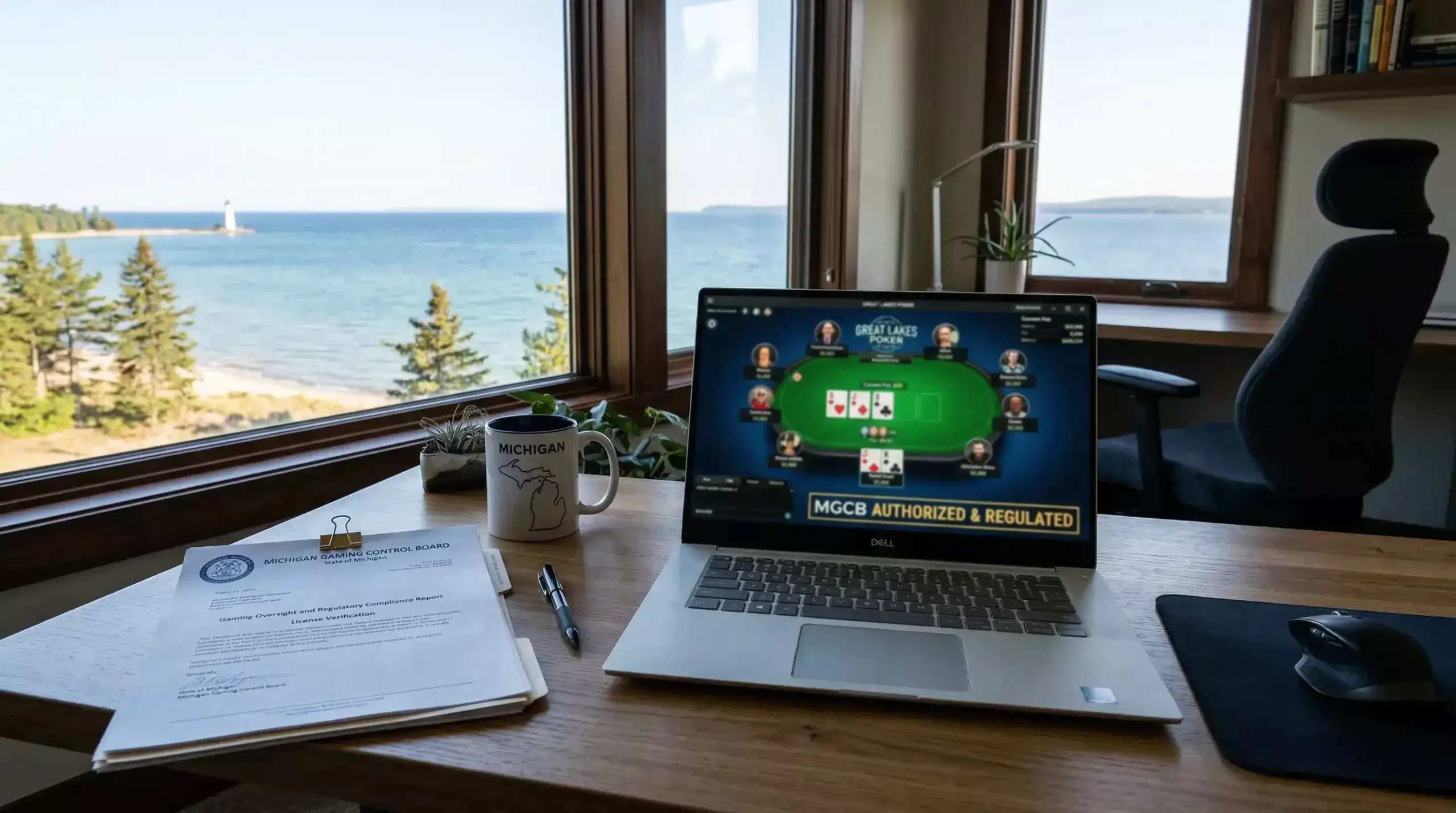
Michigan’s position on sweepstakes casinos has evolved from regulatory scrutiny to active prohibition. The state launched online casino gaming in January 2021, creating a regulated market that generates substantial tax revenue and supports licensed operators. Sweepstakes casinos represented unregulated competition that operated outside this framework—and Michigan has responded with one of the most aggressive enforcement campaigns in the country, issuing over 130 cease-and-desist letters in 2025 alone.
The regulatory dynamics in Michigan have shifted from passive monitoring to active enforcement. Licensed iGaming operators advocated for restrictions on unregulated competition, and the Michigan Gaming Control Board responded decisively. These forces have effectively closed Michigan to sweepstakes casino operations, with major platforms like Chumba, LuckyLand, and Stake.us withdrawing from the state.
As California’s Senate Public Safety Committee noted in analyzing AB 831, sweepstakes casino structures allow “both player winnings and corporate profits to go untaxed“—a concern that drove Michigan’s enforcement action. Understanding Michigan’s approach helps players recognize why access has disappeared and what alternatives exist in the state’s regulated market.
Michigan’s iGaming Context
Michigan’s legal online gambling market has grown rapidly since launch. According to AGA State of the States reporting, Michigan is one of only seven states with fully regulated iGaming markets. Internet sports betting and iGaming operators in Michigan reported $285.2 million in combined gross receipts in June 2025, representing 37.3% year-over-year growth—demonstrating the strength and trajectory of the regulated market.
The licensed operators include major gaming companies and tribal partnerships. BetMGM, DraftKings, FanDuel, and other established operators compete for Michigan players through regulated platforms that meet state requirements for game fairness, consumer protection, and responsible gambling. These operators have invested significantly in Michigan licensing and compliance—investment that sweepstakes casinos bypass entirely.
The tax structure creates clear financial interests. Michigan’s iGaming tax rate generates millions in annual revenue for the state. Sweepstakes casinos that serve Michigan residents capture player spending that might otherwise flow to taxed operators—reducing both operator revenue and state tax collections. With the sweepstakes casino market reaching $10.6 billion in gross revenue nationally in 2024, the diversion of spending from regulated to unregulated markets represented a significant concern.
Tribal gaming interests add another layer of complexity. Michigan tribes operate significant gaming facilities and have interests in online gambling through partnerships with licensed operators. Tribal gaming compacts with the state create revenue-sharing arrangements that sweepstakes casinos circumvent entirely. Tribal advocacy for sweepstakes restrictions aligned with their economic interests and their established relationships with state regulators.
Michigan Sweepstakes Casinos — More on this topic at sweepstakes legal.
The Michigan Enforcement Campaign
Michigan became the first legal iGaming state to take aggressive action against sweepstakes casinos. In October 2023, following a two-year investigation, Michigan Attorney General Dana Nessel ordered Golden Hearts Games to shut down its operations in the state—a landmark enforcement action that signaled Michigan’s intent to pursue unregulated gaming operators.
The Michigan Gaming Control Board dramatically escalated enforcement in 2025. According to Gaming Intelligence, the MGCB issued over 130 cease-and-desist letters during the year. The campaign targeted offshore casinos, sportsbooks, and sweepstakes operators alike—all platforms operating without Michigan gaming licenses.
“These unlicensed operators are not only in violation of Michigan’s laws but also pose significant risks to consumers by offering limited and often unreliable withdrawal options,” said MGCB Executive Director Henry Williams in a July 2025 announcement. The Board gave operators 14 days to comply or face further legal action in coordination with the Michigan Attorney General’s Office.
The enforcement actions weren’t limited to small operators. VGW, the parent company of Chumba Casino and LuckyLand Slots—the largest sweepstakes casino operator with an estimated $4 billion in revenue in 2024—withdrew its platforms from Michigan in April 2025. This withdrawal demonstrated that even the largest sweepstakes operators would not contest Michigan’s regulatory position.
Operator Response to Michigan Enforcement
Major sweepstakes casino operators uniformly responded to Michigan’s enforcement campaign by withdrawing from the state. Unlike states where operators have contested regulatory interpretations, Michigan’s combination of aggressive enforcement and a well-established legal iGaming market made the risk calculation clear.
The largest operators exited first. Chumba Casino and LuckyLand Slots (both owned by VGW) withdrew in early 2025 after Michigan intensified enforcement. Stake.us, Pulsz, and other significant platforms followed. The industry consensus was that Michigan represented unacceptable regulatory risk—particularly for operators who might seek licensing in other regulated markets.
Michigan’s enforcement approach differs from some other states. Rather than relying solely on cease-and-desist letters, the MGCB works in coordination with the Michigan Attorney General’s Office to pursue legal action against non-compliant operators. This partnership creates credible escalation threats that incentivize compliance.
The Social Gaming Leadership Alliance has advocated for regulatory clarity nationwide, but Michigan chose enforcement over accommodation. As SGLA Executive Director Jeff Duncan told iGaming Business: “We want to be regulated. We want to pay taxes.” But Michigan regulators apparently concluded that the existing licensing framework was sufficient—operators simply needed to obtain Michigan licenses or exit.
See also Sweepstakes Casino Compliance.
Player Alternatives in Michigan
Michigan players seeking casino-style gaming now have limited options: use the state’s licensed iGaming platforms or accept that sweepstakes casinos are no longer available. The MGCB’s enforcement campaign has effectively closed the sweepstakes casino market in Michigan.
Michigan’s legal iGaming market provides alternatives with protections that sweepstakes casinos never offered. Licensed Michigan platforms operate under regulatory oversight, consumer protections, and dispute resolution mechanisms. The Lawful Internet Gaming Act of 2019 created one of the most comprehensive regulated iGaming frameworks in the United States, with the MGCB overseeing game fairness, player protection, and responsible gaming practices.
Comparison between models favors regulated platforms on most metrics. Licensed iGaming platforms offer higher game RTPs (typically 90%+ compared to sweepstakes casino payout rates of 65-70%), stronger consumer protections, and access to responsible gambling resources integrated with state systems. The tradeoff is straightforward real-money gambling with different risk profiles—but with regulatory guarantees that unregulated platforms cannot provide.
Social casinos without prize redemption remain legal in Michigan. Platforms that operate on a single currency without cash-out options are not classified as gambling under Michigan law. However, these pure entertainment platforms lack the sweepstakes element that attracted many players to Chumba, Stake.us, and similar sites.
Michigan as a Model for iGaming States
Michigan’s approach to sweepstakes casinos demonstrates how states with established iGaming markets can effectively eliminate unregulated competition. The combination of aggressive enforcement, coordination with the Attorney General, and a strong legal iGaming alternative created conditions where sweepstakes operators chose withdrawal over confrontation.
The economic arguments for enforcement proved compelling. Every dollar spent at sweepstakes casinos represented revenue lost to licensed operators and taxes lost to the state. States collected a record $15.9 billion in gambling taxes in 2024—revenue that sweepstakes casinos don’t contribute to. Michigan’s enforcement protected both its regulated market and its share of that tax revenue.
Other iGaming states may follow Michigan’s example. New Jersey has enacted A5447 with substantial penalties for sweepstakes operators. Connecticut passed SB 1235 with criminal penalties. Pennsylvania, West Virginia, and Delaware—the remaining regulated iGaming states—may face similar pressure to address unregulated competition. Michigan’s success demonstrates that enforcement can work without waiting for specific legislation.
For Michigan players, the sweepstakes casino era has ended. The state’s licensed iGaming market provides legal alternatives with consumer protections that sweepstakes platforms never offered. Players who valued the sweepstakes model’s promotional structure must now choose between Michigan’s regulated market or relocating to states where sweepstakes casinos remain operational—a narrowing list as enforcement expands nationally.
Michigan’s trajectory from the first iGaming state to actively pursue sweepstakes casinos to one where those platforms are entirely unavailable took approximately two years. That timeline offers perspective for players in other states monitoring their own regulatory environments—change can happen faster than expected when regulators decide to act.