 Available in US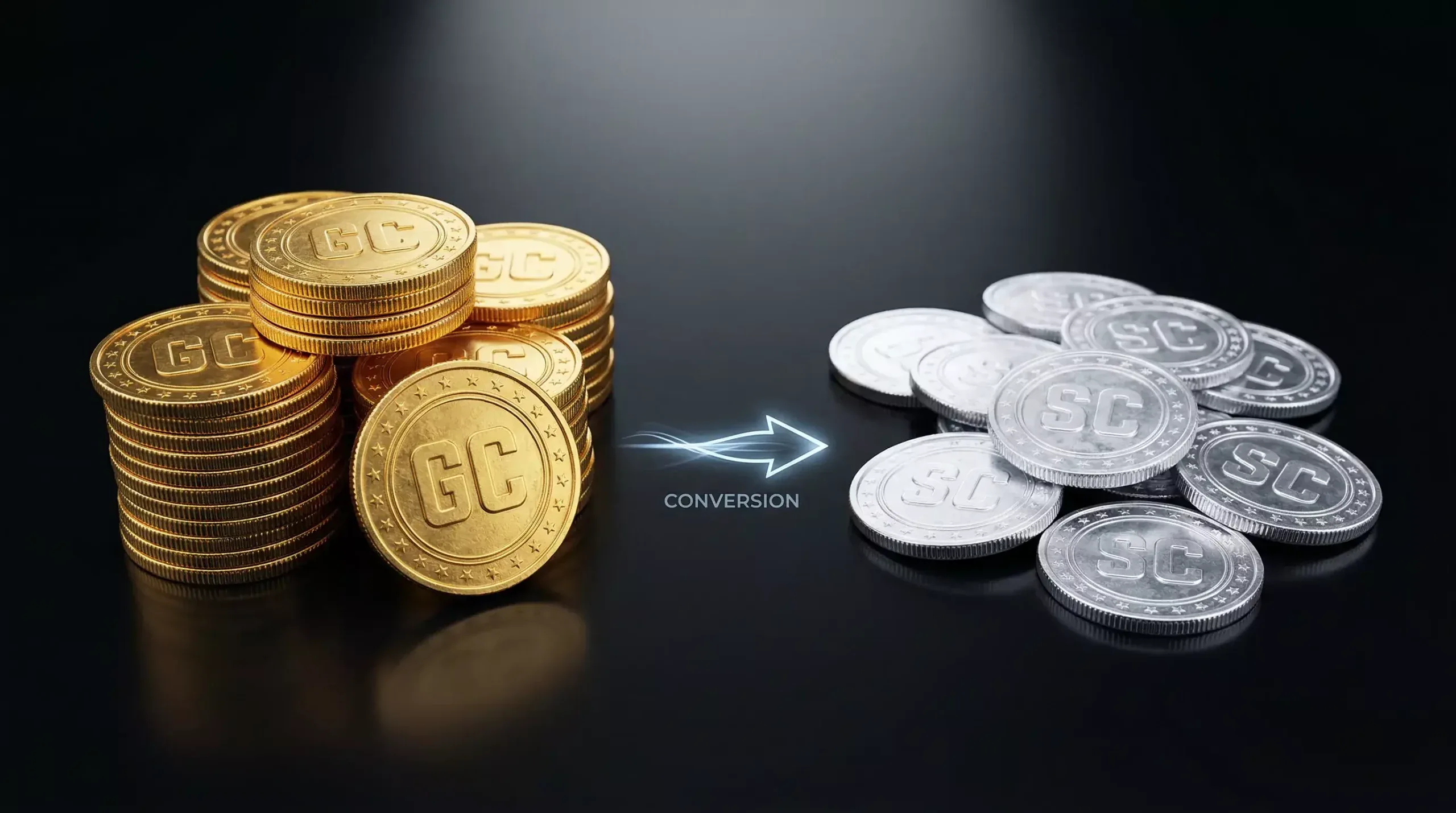
Sweepstakes casinos look exactly like regular online casinos. The slots spin the same way. The card games follow the same rules. The interfaces feel familiar to anyone who’s played at a real-money platform. Yet these aren’t casinos in the legal sense—they’re promotional sweepstakes that happen to use casino-style games as their engagement mechanism.
Play for free, win real prizes. That phrase captures the sweepstakes casino value proposition. But understanding how the model actually works—and why it’s legal in most states—requires going deeper into the dual currency system that makes everything function. The structure isn’t complicated once you grasp the key distinction: you’re buying entertainment credits and receiving promotional prize entries as a bonus.
The industry has grown enormous while operating in this legal space. According to KPMG and Eilers & Krejcik Gaming, sweepstakes casinos generated approximately $10.6 billion in gross revenue during 2024—larger than the entire regulated iGaming market in the United States. Projections for 2025 reach $14.3 billion in gross revenue and $4.6 billion in net revenue. Growth rates have been extraordinary, with 60-70% compound annual growth from 2020 to 2024. This isn’t a niche product; it’s a massive industry operating through a specific legal framework.
This guide explains the complete sweepstakes casino model: how the two currencies work, why the “no purchase necessary” requirement matters legally, what the player journey looks like from registration to prize redemption, and the economics that make the industry function. Whether you’re deciding whether to try sweepstakes casinos or just curious about the business model regulators are debating, this is the comprehensive breakdown.
How Sweepstakes Casinos Work — More on this topic at sweepstakes legal.
The Dual Currency System Explained
Every sweepstakes casino operates on two separate currencies with completely different purposes. Understanding this split is essential to understanding why the model exists.
Gold Coins are the entertainment currency. You purchase them with real money, you use them to play games, and they have no cash value. You cannot redeem Gold Coins for money—ever. They exist purely for entertainment, allowing you to spin slots, play blackjack, or try poker without any financial stake in the outcome. Think of them like tokens at an arcade: you buy them, you use them for games, and they’re worthless outside that context.
Sweeps Coins are the prize currency. You receive them for free—as bonuses when purchasing Gold Coins, through daily logins, via mail-in requests, or through promotions. Sweeps Coins can be redeemed for cash prizes once you accumulate enough and complete identity verification. This is where real money enters the equation, but crucially, you never pay for Sweeps Coins directly.
The separation matters legally because it removes the “consideration” element from prize eligibility. In gambling, you pay (consideration) for a chance to win (chance) a prize (prize). All three elements must be present for an activity to constitute gambling. Sweepstakes casinos argue their model has only two elements: you receive Sweeps Coins for free (no consideration), you play games of chance (chance), and you can win cash prizes (prize). No consideration, no gambling.
The dual currency system isn’t arbitrary—it’s the entire legal foundation. Every design choice flows from maintaining the separation between Gold Coins (which you buy) and Sweeps Coins (which you receive free). Collapse that distinction, and the legal argument collapses with it.
Platform interfaces reinforce the separation. Players typically toggle between “Gold Coin mode” and “Sweeps Coin mode” when selecting games. Balances display separately. Purchase flows make clear you’re buying Gold Coins with Sweeps Coins as a promotional bonus. These interface choices serve legal compliance as much as user experience.
Critics argue the separation is artificial—that players purchase Gold Coins specifically to receive Sweeps Coins, making the currencies functionally linked. Defenders counter that the same logic applies to any promotional sweepstakes: nobody buys a soda specifically for the bottle cap code, but the free entry option exists and the prize isn’t technically purchased. The legal structure, not player motivation, determines classification.
See also Articles.
Gold Coins: The Entertainment Currency
Gold Coins represent pure entertainment value. When you purchase a Gold Coin package—$10 for 100,000 GC, $20 for 220,000 GC, or similar offers—you’re buying the ability to play games without any potential financial return from those specific coins.
The market scale is substantial. According to RG.org’s market research, players spent between $8.5 billion and $10.6 billion on Gold Coins in 2024 alone. This represents the primary revenue stream for sweepstakes casino operators—the actual money entering the system.
Gold Coins function like credits in any entertainment system. You can use them to spin slots, play table games, enter tournaments, or access any game on the platform. When you win with Gold Coins, you win more Gold Coins. When you lose, your Gold Coin balance decreases. But no matter how many Gold Coins you accumulate through play, you cannot convert them to cash.
This non-redeemability is critical. By ensuring Gold Coins have no cash value, platforms maintain the argument that Gold Coin purchases are entertainment transactions, not gambling wagers. You’re paying for entertainment, not for a chance to win money. The entertainment happens regardless of whether you win or lose at the games—you got to play, which is what you paid for.
Gold Coin packages almost always include bonus Sweeps Coins. A typical offer might advertise “200,000 Gold Coins + 20 FREE Sweeps Coins for $20.” The phrasing matters: Gold Coins are what you’re buying; Sweeps Coins are a promotional bonus attached to that purchase. The promotional structure is essential to maintaining legal separation.
Some players spend heavily on Gold Coins without ever redeeming Sweeps Coins. They’re playing for entertainment—the same reason people play social casino games like Slotomania or Zynga Poker that offer no cash prizes at all. For these players, Gold Coins are the entire point.
The purchase mechanics vary by platform but follow similar patterns. Credit cards, debit cards, PayPal, Apple Pay, and other payment methods are typically accepted. Some platforms offer subscription models—recurring monthly Gold Coin deliveries at discounted rates. Package sizes scale from small ($5-10) to substantial ($100+), with larger packages offering better SC bonus ratios.
Sweeps Coins: The Prize Currency
Sweeps Coins are what make sweepstakes casinos different from purely social casinos. They can be redeemed for cash prizes—typically at a 1:1 ratio with US dollars—after you accumulate enough and complete identity verification.
The prize payouts are significant. According to RG.org’s research, sweepstakes casinos returned over $7 billion in prizes to players in 2024. This isn’t theoretical value—it’s actual money transferred to player bank accounts after Sweeps Coin redemption.
You receive Sweeps Coins through several channels, all of which must be free:
Gold Coin purchase bonuses represent the primary distribution method. Buy Gold Coins, receive Sweeps Coins as a promotional bonus. The ratio varies by platform and package size—larger purchases typically include more bonus SC per dollar spent.
Daily login bonuses give active players free Sweeps Coins without purchase. Log in each day, claim your bonus. Some platforms tier these bonuses, with consecutive day logins earning progressively more SC.
Mail-in requests provide Sweeps Coins through Alternative Method of Entry (AMOE). Write a request on a postcard or paper, mail it to the platform’s address, and receive Sweeps Coins credited to your account. This method exists to establish that no purchase is necessary to obtain prize entries.
Social media giveaways and promotions distribute additional Sweeps Coins through contests, referral bonuses, and special events. Platforms use these to drive engagement and player acquisition.
When you play games with Sweeps Coins, wins add to your SC balance and losses subtract from it. Unlike Gold Coins, the outcomes matter financially because accumulated SC can eventually become cash. Most platforms require a minimum redemption threshold—typically 50 to 100 Sweeps Coins—before you can cash out.
No Purchase Necessary: The Legal Foundation
The phrase “No Purchase Necessary” appears on every legitimate sweepstakes casino. It’s not marketing language—it’s a legal requirement that enables the entire business model to exist.
Traditional promotional sweepstakes have operated under this rule for decades. Enter a code from your soda cap, mail in a postcard, or fill out a form—no purchase required to win. Sweepstakes casinos apply the same principle: because free methods exist to obtain Sweeps Coins, no purchase is necessary to participate in the prize system.
The mail-in Alternative Method of Entry (AMOE) is the most concrete expression of this requirement. Any player can write to the sweepstakes casino, request free Sweeps Coins, and receive them without spending anything. The fact that most players don’t bother with mail-in requests doesn’t matter legally—the free path exists, which satisfies the no-purchase requirement.
Critics view this as a technicality that enables gambling under another name. “Sweepstakes operators are exploiting an antiquated definition of gambling and an antiquated definition of sweepstakes,” Keith Whyte, former NCPG Executive Director, told the Washington Post via Sports Betting Alliance coverage. The argument: nobody actually uses mail-in entries; everyone buys Gold Coins. The free option is theoretical rather than practical.
Defenders counter that the legal structure is sound. The same no-purchase-necessary requirement governs all promotional sweepstakes. McDonald’s Monopoly, Coca-Cola giveaways, and corporate contests all offer free entry alongside purchase-based entry. Sweepstakes casinos differ in scale and engagement mechanism, not legal structure.
Regardless of which view you find more persuasive, the no-purchase-necessary element is what makes sweepstakes casinos legal in most states. Remove free entry options, and platforms would need gambling licenses. The requirement isn’t optional—it’s foundational.
The Player Journey
Understanding how players actually experience sweepstakes casinos helps clarify how the model works in practice.
Registration typically requires email verification and basic account information. Most platforms are 18+ (some states require 21+). Geographic verification confirms you’re in an eligible state—players in Washington, Idaho, Montana, California, and other banned states get blocked at this stage.
Welcome bonuses provide initial Sweeps Coins without requiring purchase. New players often receive 2-10 free Sweeps Coins just for creating an account. Some platforms offer additional SC for completing profile verification or other actions. These no-purchase bonuses establish immediate eligibility for prize play.
First purchase is where most players actually engage. While welcome bonuses allow some free play, the amounts are typically small. Gold Coin packages provide larger SC bonuses, enabling extended play. First-purchase offers often include enhanced SC ratios to encourage initial spending.
Active play involves using both currencies across available games. Players toggle between Gold Coin mode (entertainment, no cash value) and Sweeps Coin mode (prize-eligible). Many players spend most time in SC mode, where wins translate to potential cash value.
Accumulation builds Sweeps Coin balances through play wins, daily bonuses, and additional purchases. Players track their SC balance against redemption thresholds. Some platforms require 50 SC minimum; others set higher bars.
Verification must be completed before redemption. Know Your Customer (KYC) requirements include government ID, proof of address, and sometimes Social Security number (for tax reporting on larger prizes). First-time verification can take several days. Subsequent redemptions process faster once identity is established.
Redemption converts Sweeps Coins to cash. Players request withdrawal, the platform processes the request, and funds transfer to bank accounts, PayPal, or other payment methods. Processing typically takes 3-7 business days, though some platforms are faster.
The entire journey—from registration through first redemption—typically takes days to weeks depending on play patterns and verification speed. Players expecting instant gratification may find the process frustrating. The delays are intentional: sweepstakes structures differ from gambling’s immediacy, and the friction reinforces the promotional character of the model.
Prize Redemption Process
Converting Sweeps Coins to cash involves several steps that distinguish sweepstakes casinos from traditional gambling operations.
KYC verification comes first for new redeemers. You’ll need to upload government-issued ID (driver’s license or passport), proof of address (utility bill or bank statement), and potentially Social Security number if your redemption triggers tax reporting thresholds. Platforms use these documents to verify identity, confirm age, validate residence in an eligible state, and comply with financial reporting requirements.
Minimum thresholds must be met before redemption is available. Common minimums range from 50 to 100 Sweeps Coins ($50-$100 equivalent). Some platforms set higher bars, particularly for first redemptions. These thresholds reduce processing costs and ensure players have meaningful engagement before cash-out.
Processing time varies by platform and payment method. Bank transfers typically take 3-7 business days. PayPal and some e-wallet options can be faster—sometimes same-day for verified accounts. First redemptions take longer due to initial verification; subsequent redemptions process more quickly.
Payment methods include direct bank transfer (ACH), PayPal, Skrill, and occasionally paper checks. Platform support varies. Some players prefer PayPal for speed; others use direct deposit for simplicity. Payment method availability may depend on your state and account history.
Tax implications accompany larger redemptions. Platforms issue 1099-MISC forms for annual redemptions exceeding $600 (rising to $2,000 in 2026). Redemptions over $5,000 may trigger 24% withholding. Players are responsible for reporting all prize income regardless of whether they receive tax forms.
The redemption process’s formality—verification requirements, processing delays, minimum thresholds—distinguishes it from instant gambling payouts. These friction points are partly practical (compliance costs) and partly structural (maintaining the promotional sweepstakes character).
The Economics Behind the Model
Sweepstakes casinos generate revenue through Gold Coin sales while distributing a portion back as Sweeps Coin prizes. Understanding the economics explains why the model sustains itself.
Conversion rates reveal how the model functions. According to RG.org’s market analysis, only about 12% of sweepstakes casino users actually make purchases. The remaining 88% play with free Sweeps Coins from daily bonuses, promotions, and mail-in entries. This “freemium” model mirrors mobile gaming economics: many users play free while a smaller group of paying users generates all revenue.
Payout rates indicate operator margins. The same research estimates sweepstakes casinos return approximately 65-70% of Gold Coin revenue as Sweeps Coin prizes. This means operators retain 30-35% after prize payouts—before accounting for operational costs, game licensing, payment processing, and other expenses.
The math works because of the 88% who don’t pay. Free players generate no revenue but also claim relatively few prizes (their SC balances are limited). Paying players fund the prize pool through Gold Coin purchases, with operators keeping the spread between revenue in and prizes out.
Scale drives profitability. The industry generated roughly $10.6 billion in gross revenue during 2024 while paying out approximately $7 billion in prizes. The remaining $3.6 billion covers operations, marketing, game licensing, and profit. Individual operator margins vary, but the overall economics support a substantial industry.
Growth compounds the model’s effectiveness. Sweepstakes operators acquire new players approximately three times faster than regulated real-money casinos, according to industry analysis. Lower barriers—no licensing delays, broader geographic availability, easier payment processing—translate to faster expansion. The revenue compounds even as payout ratios remain relatively constant.
The sustainability question looms. As states ban sweepstakes casinos—California’s $2.42 billion exit being the most significant—the addressable market shrinks. Growth rates that assumed continued geographic expansion may not persist. Operators face strategic decisions about investment levels, market focus, and whether to pursue regulated status in states that might offer licensing alternatives to prohibition.
Comparison with regulated gambling illuminates the trade-offs. Licensed casinos pay substantial taxes and compliance costs but operate with regulatory legitimacy and state protection. Sweepstakes casinos avoid those costs but face existential regulatory risk. The arbitrage is profitable while it lasts; its duration is uncertain.
Common Misconceptions
Several misunderstandings circulate about sweepstakes casinos. Addressing them helps players approach the model accurately.
“It’s just gambling with a different name.” Legally, no. The structural differences—separate currencies, no purchase necessary, promotional prize structure—create a distinct legal category. Whether you personally view it as gambling doesn’t change the legal classification. Courts and regulators in most states have accepted the sweepstakes framework, even as critics argue it’s a distinction without a practical difference.
“Free Sweeps Coins are worthless.” They’re not. Free SC from daily logins, mail-in requests, and promotions function identically to SC received through Gold Coin bonuses. Many players have won significant prizes using only free Sweeps Coins. The amounts are smaller than purchased bonuses provide, but the redemption value is real.
“The games are rigged.” No evidence supports this claim for established platforms. Major sweepstakes casinos use games from reputable software providers whose Random Number Generators undergo independent testing. However, sweepstakes casinos aren’t regulated like licensed gambling operations, so the oversight verifying fairness is voluntary rather than mandated. Sticking to established platforms with reputations to protect is prudent.
“You can get rich.” You shouldn’t expect to. The 65-70% payout rate means the house edge is significant. Some players win substantial prizes; the aggregate player pool loses money over time. Approaching sweepstakes casinos as entertainment with prize potential—rather than income opportunity—sets realistic expectations.
“It’s legal everywhere.” It’s not. Washington, Idaho, Montana, California, Connecticut, New Jersey, and New York have banned sweepstakes casinos. Other states occupy grey zones with active enforcement. Checking your state’s current status before playing is essential.
Playing Smart at Sweepstakes Casinos
The dual currency model works as designed, enabling casino-style gaming in most US states through a promotional sweepstakes structure. Gold Coins provide entertainment value; Sweeps Coins provide prize potential. The separation creates legal distinction from gambling, whatever critics argue about its practical similarity.
Understanding the model helps you play smarter. Gold Coin purchases are entertainment expenses—don’t expect them back. Sweeps Coins won through play can become real money, but the odds favor the house over time. Free daily bonuses and mail-in requests provide genuine prize opportunities without purchase. Redemption requires verification and takes time. Tax obligations are real.
Set limits before you play. The sweepstakes model can obscure spending because you’re buying “Gold Coins” rather than making bets. Track your purchases the same way you’d track gambling expenses—because functionally, that’s what they are for most players. Responsible gaming tools may be available depending on platform, but without regulatory mandates, their implementation varies.
The regulatory landscape is shifting. States that permitted sweepstakes casinos for years are beginning to restrict them. California’s 2026 ban eliminated the largest single-state market. Other states may follow. If you’re playing in a grey-zone state with active enforcement against sweepstakes operators, access could change without warning.
For players who approach sweepstakes casinos as entertainment—accepting that purchases fund play rather than guarantee returns—the model offers casino experiences inaccessible through licensed gambling in most states. For players seeking income or expecting to win consistently, disappointment is likely.
The industry faces increasing scrutiny, but the core model remains functional in over 40 states. How that balance shifts in coming years depends on regulatory decisions that remain uncertain. Playing informed, playing responsible, and tracking legal developments in your state represents the smart approach to sweepstakes casino engagement.
This guide provides general information about how sweepstakes casinos operate. It is not legal advice or gambling advice. Consult appropriate professionals for specific questions. Information current as of March 2026.