 Available in US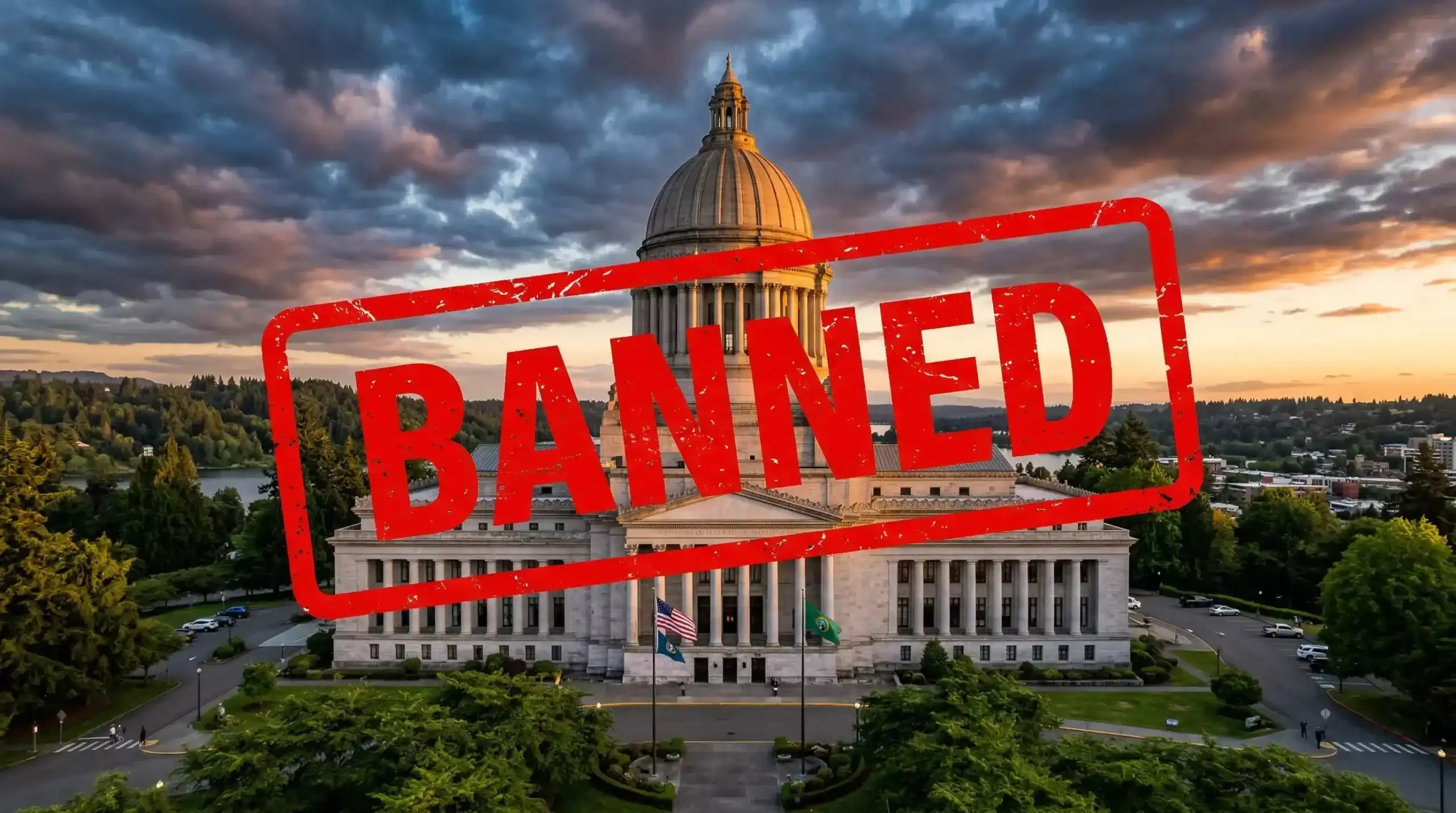
Washington State has never been friendly to sweepstakes casinos. While platforms like Chumba Casino and LuckyLand Slots operate freely in over 40 states through their dual-currency model, Washington residents see a familiar message when they try to register: access denied.
This isn’t a recent crackdown or a response to the wave of legislation sweeping through states like California and New York. Washington banned sweepstakes casinos from the beginning under RCW 9.46, the state’s comprehensive gambling statute. The law predates the sweepstakes casino industry by decades, yet its broad language captures exactly the kind of activity these platforms facilitate. While seven states introduced bills to ban or restrict sweepstakes casinos in 2025—including New Jersey, Mississippi, Maryland, Connecticut, New York, Nevada, and Florida—Washington simply points to existing law and says no entry required.
For players in the Evergreen State, understanding why sweepstakes casinos are blocked means understanding how Washington defines gambling itself—and why the usual legal arguments that work elsewhere fall flat here.
Washington State Sweepstakes Casino Laws — More on this topic at sweepstakes legal.
Understanding Washington’s RCW 9.46 Gambling Statute
Washington’s gambling law, codified as Revised Code of Washington (RCW) Chapter 9.46, ranks among the strictest in the United States. The statute establishes that all gambling is illegal unless explicitly authorized by the Washington State Gambling Commission. This opt-in framework differs fundamentally from the permissive approach most states take, where activities are legal unless specifically prohibited.
The law defines gambling with deliberate breadth. Under RCW 9.46.0237, gambling means staking or risking something of value upon the outcome of a contest of chance or a future contingent event not under the person’s control or influence. Washington courts have consistently interpreted “something of value” expansively, and this interpretation is where sweepstakes casinos run into trouble.
While sweepstakes operators argue that players don’t risk anything because Sweeps Coins are free, Washington regulators counter that the time spent playing, the personal data submitted during registration, and the attention given to advertisements all constitute value. The state’s position: if someone is exchanging anything the operator wants in return for a chance to win prizes, that’s gambling under Washington law.
The statute doesn’t make exceptions for promotional mechanisms or dual-currency models. RCW 9.46.0241 specifically addresses gambling devices, defining them as any device the operation of which may create a right to money or value as the result of chance, including slot machines, video pull-tabs, video poker, and other electronic games of chance. A sweepstakes casino’s slot machine interface, regardless of which currency it displays, falls squarely within this definition. The mechanism that determines whether a player wins Sweeps Coins uses the same random number generators and probability calculations as regulated slot machines—something Washington regulators consider indistinguishable from traditional gambling equipment.
Penalties under RCW 9.46 scale with the severity of the offense. Professional gambling, which includes operating gambling activities, can result in Class B felony charges carrying up to 10 years imprisonment and fines up to $20,000. Even players who knowingly participate in illegal gambling face gross misdemeanor charges with potential jail time up to 364 days.
See also New York Sweepstakes Casino Crackdown.
How Washington Defines Gambling: The State’s Interpretation
The legal argument that keeps sweepstakes casinos operating in most states hinges on the prize-chance-consideration framework. Traditional gambling requires all three elements: a prize (potential winnings), chance (random outcome), and consideration (something of value wagered). Remove any one element, and the activity theoretically isn’t gambling. Sweepstakes casinos claim to eliminate consideration by making Sweeps Coins free through daily bonuses, mail-in requests, and promotional offers.
Washington rejects this logic through what legal scholars call the “alternative consideration” doctrine. The state has successfully argued in court that consideration can take forms beyond direct monetary payment. When a player creates an account, they provide personal information that has commercial value. When they watch advertisements before claiming daily bonuses, they’re exchanging attention—a commodity that advertisers pay for. When they make any purchase of Gold Coins, even though those coins technically can’t be cashed out, they’re demonstrating a willingness to spend money in connection with a chance-based game.
This interpretation finds support in Washington’s regulatory history. The Washington State Gambling Commission has consistently ruled that internet sweepstakes cafes—the physical predecessors to online sweepstakes casinos—violated state law. Those operations used nearly identical legal arguments: patrons purchased internet time or phone cards, received sweepstakes entries as a bonus, and could redeem winnings for prizes. Washington shut them down systematically throughout the 2000s and 2010s.
The Gambling Commission takes the position that the substance of an activity, not its labeling, determines legality. A slot machine game that pays prizes based on random outcomes is a slot machine, regardless of whether it’s denominated in dollars, Sweeps Coins, or bottle caps. The fact that sweepstakes operators based outside Washington can’t be easily prosecuted doesn’t make their services legal within state borders—it simply means enforcement focuses on blocking access rather than pursuing criminal charges against offshore companies.
Enforcement History and Precedents
Washington’s enforcement approach differs from states that have recently moved against sweepstakes casinos through cease-and-desist campaigns or new legislation. Instead of reactively addressing sweepstakes operators one by one, Washington’s longstanding legal framework means major operators never attempted market entry in the first place.
The most instructive enforcement precedents come from the internet sweepstakes cafe era. Between 2010 and 2015, the Gambling Commission systematically investigated and closed dozens of storefront operations across the state that offered sweepstakes gaming on computer terminals. These enforcement actions established case law that Washington courts apply to online sweepstakes operations. In multiple rulings, judges affirmed that the method of delivering a gambling game—whether through a physical terminal in a strip mall or through a website accessible from someone’s living room—doesn’t change the underlying activity’s legality.
Major sweepstakes casino operators have responded by implementing strict geoblocking. VGW, which operates Chumba Casino and holds roughly 50% market share in the sweepstakes industry—down from 90% in 2020—according to Eilers & Krejcik Gaming analysis, blocks Washington IP addresses at registration. Players who attempt to create accounts from Washington receive explicit notices that the service isn’t available in their state. This self-enforcement by operators is a direct response to Washington’s clear legal position—operators recognize that offering services to Washington residents would expose them to prosecution if they ever set foot in the United States.
As Keith Whyte, President of Safer Gambling Strategies and former NCPG Executive Director, has noted, “Sweepstakes operators are exploiting an antiquated definition of gambling and an antiquated definition of sweepstakes.” Washington’s broad statutory framework, however, leaves no room for such arguments. The state’s position predates these legal strategies by decades.
The Washington State Gambling Commission maintains an active online gambling complaint system and investigates reports of operators attempting to serve state residents. While the Commission cannot directly prosecute companies based overseas, it coordinates with payment processors and internet service providers to disrupt illegal operations. This layered enforcement strategy has proven effective at keeping sweepstakes casinos functionally inaccessible to Washington residents through legitimate channels.
What This Means for Washington Players
Washington residents looking for sweepstakes casino access face a straightforward situation: major platforms won’t serve them, and attempting to circumvent geoblocking creates legal exposure. Using a VPN to mask your location and access a blocked sweepstakes casino violates both the operator’s terms of service and potentially Washington state law.
The practical consequences of VPN circumvention are significant. Sweepstakes operators employ multiple verification layers including IP checking, GPS data from mobile devices, and address verification during prize redemption. Players who successfully create accounts using a VPN face account termination and forfeiture of any accumulated Sweeps Coins when they attempt to cash out. The Know Your Customer (KYC) process required for prize redemption over minimum thresholds will reveal the player’s actual location through submitted identification documents.
Beyond platform-level consequences, Washington residents who gamble illegally can face criminal charges. While enforcement against individual players is rare—prosecutors typically prioritize operators—the statutory framework exists for gross misdemeanor charges against participants in illegal gambling. Players should also note that any winnings from illegal gambling activities may not be legally recoverable if the operator refuses payment.
Legal alternatives do exist in Washington. The state has authorized tribal casinos, cardrooms, and the state lottery. Sports betting remains prohibited, but fantasy sports operate legally. Players seeking casino-style games have legitimate options through the numerous tribal gaming facilities that operate under compacts with the state. These facilities offer regulated slots, table games, and other casino experiences with consumer protections that sweepstakes casinos can’t match.
The Bottom Line on Washington’s Ban
Washington’s sweepstakes casino ban isn’t a recent reaction to an emerging industry—it’s the consistent application of gambling laws that have been on the books for decades. The state’s broad definition of gambling, combined with its opt-in regulatory framework and aggressive historical enforcement against similar operations, makes the legal landscape crystal clear.
Unlike California’s AB 831 or New Jersey’s A5447, which represent new legislative responses to sweepstakes casinos, Washington didn’t need new laws. RCW 9.46 already covered the activity. This makes Washington’s ban more entrenched and less likely to change than restrictions in states that are still developing their regulatory approach. Players in the Evergreen State should expect sweepstakes casino access to remain blocked for the foreseeable future—and should understand that attempting to circumvent these blocks carries real legal and financial risks.