
 Available in US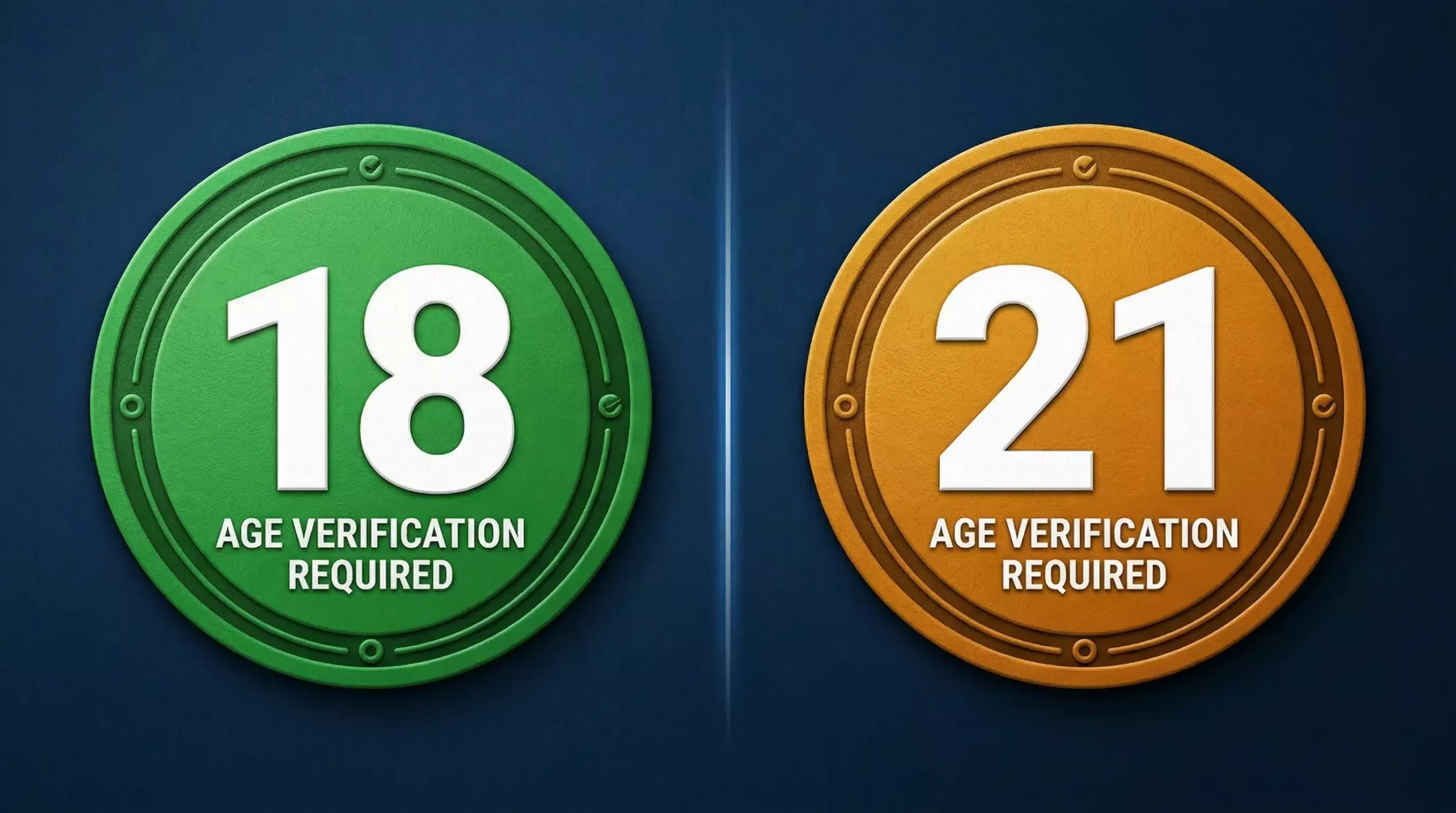
The age requirement to play at sweepstakes casinos isn’t as straightforward as you might expect. While most platforms set 18 as their minimum age, state laws can impose higher thresholds. Players in certain states must be 21 to participate, and the verification processes that enforce these requirements kick in at different stages of the player journey.
Understanding age requirements matters for two reasons. For players, it determines whether participation is legally permitted and what documentation will be required for prize redemption. For the industry, age verification represents one of the few consumer protections that sweepstakes casinos consistently implement—though the American Gaming Association has criticized these protections as inadequate. According to their policy memo on sweepstakes, “The lack of regulatory oversight presents many risks for consumers as well as the integrity and economic benefits of the legal gaming market through investment and tax contributions. These sweepstakes-based operators have weak (if any) responsible gaming protocols and few, if any, self-exclusion processes.”
The gap between registration (where self-reported ages often suffice) and redemption (where document verification confirms eligibility) creates a window where underage players can access games without consequence until they attempt to withdraw winnings. This structure reflects the promotional sweepstakes legal model but raises questions about youth protection that regulators are increasingly examining.
Sweepstakes Casino Age Requirements — More on this topic at sweepstakes legal.
18+ vs 21+ States
The default age requirement at most sweepstakes casinos is 18 years old. This threshold applies in the majority of states where these platforms operate and reflects the general legal age for entering contracts and participating in promotional sweepstakes under federal and most state laws.
Several states impose 21+ requirements for sweepstakes casino participation. Iowa, Nebraska, and some other states require players to be 21, aligning sweepstakes casino access with their regulated gambling age thresholds. In Iowa, all casinos, including social casinos, insist you are 21 or older. Players in these states must be 21 even though the same platforms accept 18-year-olds from other jurisdictions.
The legal basis for these age variations stems from state gambling and consumer protection statutes. While sweepstakes casinos argue they aren’t gambling operations, states that impose 21+ requirements typically apply gambling-adjacent regulations or consumer protection rules that set the higher threshold. Platforms must comply with these state-specific requirements regardless of their own corporate policies.
Determining your state’s age requirement requires checking both the platform’s terms of service and your state’s relevant statutes. Platforms typically list restricted states and age requirements in their terms, though this information isn’t always prominently displayed. When in doubt, contacting customer support or reviewing the platform’s legal documentation provides clarity.
The age patchwork creates compliance complexity for operators. According to KPMG industry analysis, sweepstakes casinos operate across 35+ states, each with potentially different age requirements. Platforms must track and enforce these varying thresholds accurately, updating systems when state laws change.
How Platforms Verify Age
Age verification at sweepstakes casinos happens in stages, with increasingly stringent checks at different points in the player experience. This graduated approach reflects the promotional model’s low barriers to entry while maintaining ultimate verification at the cash-out stage.
Registration typically requires only self-reported birthdate information. Players enter their date of birth during account creation, and the platform accepts this claim at face value for initial access. Some platforms perform basic cross-checks against the email address or compare the claimed birthdate against patterns suggesting false information, but these checks are minimal compared to regulated gambling verification.
Gameplay access continues without additional verification for players who registered with eligible birthdates. Players can accumulate Sweeps Coins, play games, and build balances without proving their claimed age is accurate. This permissive period can extend indefinitely for players who never attempt prize redemption.
Redemption triggers mandatory Know Your Customer verification, including age confirmation through government-issued identification. Players must submit driver’s licenses, state IDs, or passports that show both their photograph and date of birth. The verification process confirms that the player actually meets age requirements—not just that they claimed to during registration.
The verification gap between registration and redemption means underage players can access and play games. They cannot withdraw prizes, but the gaming experience itself remains available until identification is required. Critics argue this structure provides inadequate youth protection, exposing minors to gambling-like experiences even if prize collection is ultimately blocked.
See also Cease-and-Desist Letters.
Consequences of Underage Play
Players who access sweepstakes casinos while underage face specific consequences when their actual age is discovered during the verification process or through other means.
Account termination is the standard response. When verification reveals a player is below the required age threshold, platforms close the account and revoke access. This termination is typically permanent—players cannot simply wait until they reach the required age and resume using the same account.
Balance forfeiture accompanies account closure. Any accumulated Sweeps Coins, Gold Coins, or other virtual currencies are voided without compensation. Players who invested time building balances, or who made Gold Coin purchases before verification revealed their ineligibility, lose that value entirely. Terms of service universally state that underage players have no claim to account balances.
Refund policies for purchases made by underage players vary. Some platforms may refund Gold Coin purchases to the payment method used, particularly if parents request refunds for unauthorized purchases by minors. Other platforms treat all purchases as final regardless of the purchaser’s age, pointing to terms of service that prohibit underage participation. Disputing charges through payment providers may be necessary if platforms refuse direct refunds.
Legal consequences for underage players themselves are generally minimal. Unlike regulated gambling where underage participation can carry criminal penalties, sweepstakes casino access by minors typically results only in platform-level consequences. However, parents may face liability for minors’ activities depending on state consumer protection laws and the circumstances of the minor’s access.
Platform Age Policies
Individual sweepstakes casino platforms implement age requirements through their terms of service, establishing rules that may exceed minimum legal thresholds in some cases.
Most major platforms default to 18+ in states without higher requirements. Chumba Casino, LuckyLand Slots, Pulsz, and similar platforms all set 18 as their baseline minimum age. Players in 21+ states face the higher threshold automatically based on their registered location.
Terms of service universally prohibit underage registration. Every legitimate sweepstakes casino explicitly states that accounts may only be created by individuals meeting the applicable age requirement. Creating an account with a false birthdate violates these terms and provides grounds for account termination and balance forfeiture at any time.
Parental responsibility language appears in most platforms’ terms. Operators disclaim responsibility for minors who access their services, placing the obligation on parents and guardians to prevent unauthorized use. This language shifts liability but doesn’t eliminate platforms’ own compliance obligations under state laws.
The industry’s voluntary age verification practices have drawn criticism from regulatory bodies. Youth exposure to gambling-like experiences—even without prize redemption—raises concerns about developing problematic gambling behaviors. According to a 2025 report from the National Council on Problem Gambling, 5% of children aged 12-17 now experience problem gambling—a number that has quadrupled in just two years. Research indicates that early exposure to gambling activities correlates with higher rates of problem gambling in adulthood, making age restrictions particularly important.
Protecting Yourself and Your Family
Age requirements at sweepstakes casinos exist for legal compliance and, in theory, for player protection. Understanding how these requirements function helps adults make informed participation decisions and helps parents protect minors from inappropriate access.
For adult players, ensuring accurate age information during registration prevents complications at redemption. Players who misrepresent their age—even unintentionally through typos—may face extended verification processes or disputes when attempting to cash out. Accurate registration information streamlines the entire player experience.
For parents, awareness of sweepstakes casino accessibility is essential. These platforms don’t require credit cards or adult payment methods for account creation—only email addresses and self-reported birthdates. Standard parental controls may not block sweepstakes casino websites, and the games themselves closely resemble entertainment apps rather than obvious gambling products. Active monitoring and conversations about gambling-like games provide better protection than assuming technical controls will prevent access.
The promotional sweepstakes structure that enables sweepstakes casinos to operate also creates the verification gaps that allow underage access to games. Until regulatory frameworks require more stringent upfront verification, age protection at these platforms will remain weaker than at regulated gambling operations where ID verification precedes any gameplay access.