
 Available in US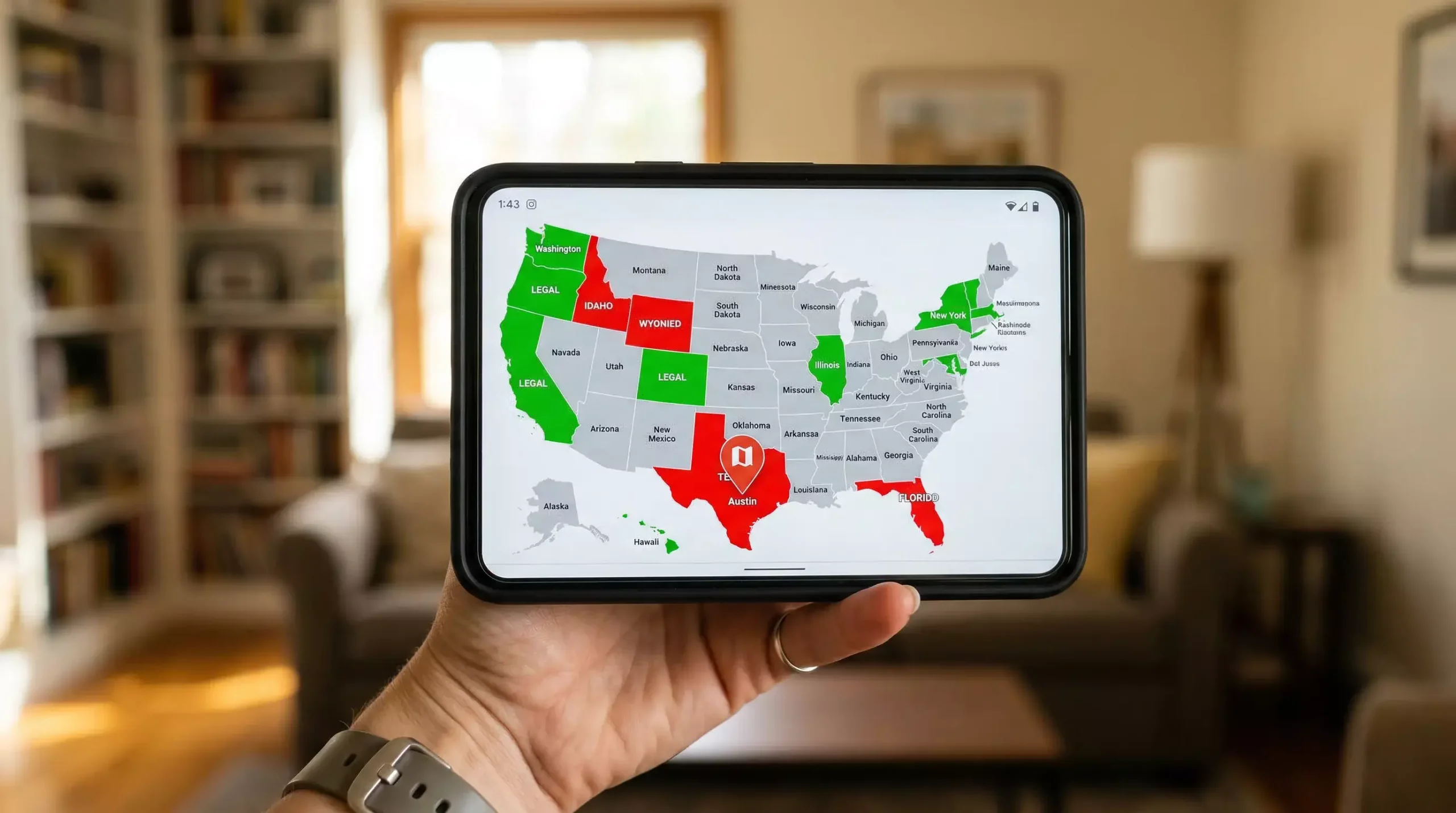
Every sweepstakes casino needs to know where you are. Not your precise address—at least not initially—but your state of residence. This location information determines whether you can register, which age requirements apply, and ultimately whether you can redeem Sweeps Coins for prizes. Geolocation technology enforces the patchwork of state-by-state restrictions that define sweepstakes casino accessibility.
The technology behind geolocation has evolved significantly as states have increased enforcement pressure. Basic IP address checking has given way to multi-layered verification combining IP geolocation, GPS data, WiFi triangulation, and document verification. According to the American Gaming Association’s policy memo on sweepstakes, these operators have “weak (if any) responsible gaming protocols and few, if any, self-exclusion processes”—yet geolocation technology represents one area where platforms have invested substantially, protecting themselves from regulatory exposure in blocked states.
Understanding how geolocation works helps explain both why certain platforms aren’t available in your state and why attempting to circumvent these restrictions carries significant risks. The systems aren’t perfect, but they’re sophisticated enough to catch most circumvention attempts eventually.
Sweepstakes Casino Geolocation — More on this topic at sweepstakes legal.
How Geolocation Technology Works
Sweepstakes casinos deploy multiple geolocation methods, layering different technologies to create reasonably accurate state-level identification. Each method has strengths and limitations that together provide workable verification.
IP address geolocation provides the first and most common check. Every internet connection has an IP address that can be mapped to a geographic region through commercial databases maintained by companies like MaxMind and IP2Location. When you visit a sweepstakes casino website, the platform checks your IP address against these databases to estimate your location. IP geolocation is fast and requires no user action, but accuracy varies—it typically identifies country and state reliably but can be fooled by VPNs and proxy services.
GPS verification provides more precise location data on mobile devices. Sweepstakes casino apps request location permissions and access device GPS to confirm the player’s physical location. GPS data is significantly harder to spoof than IP addresses, though not impossible. Desktop users typically can’t provide GPS data, limiting this verification method to mobile platforms.
WiFi-based location services supplement GPS on devices where it’s available. These systems identify nearby WiFi networks and compare them against databases of known network locations. The technique can verify location even when GPS signals are weak or unavailable and provides an additional data point to cross-reference against other location signals.
Device and browser fingerprinting create profiles that can detect location inconsistencies. Time zone settings, language preferences, browser localization, and other signals should align with claimed location. A device with Pacific time zone settings claiming to be in New York raises flags that trigger additional verification.
Address verification during KYC provides definitive confirmation for prize redemption. While players can potentially fool automated geolocation during registration and play, redeeming Sweeps Coins requires submitting identification documents showing residential address. This document-based verification catches players who circumvented earlier checks.
See also Social Casino vs Sweepstakes Casino.
VPN Detection Methods
Virtual Private Networks present the most common circumvention attempt. VPNs route internet traffic through servers in different locations, masking the user’s actual IP address and making it appear they’re connecting from wherever the VPN server is located. Sweepstakes casinos have developed multiple methods to detect and block VPN usage.
IP reputation databases maintain lists of known VPN server addresses. When traffic comes from an IP address associated with VPN providers, platforms can block access or require additional verification. VPN providers constantly add new servers to evade these lists, creating an ongoing cat-and-mouse dynamic where databases and providers each try to stay ahead of the other.
Traffic pattern analysis identifies VPN characteristics. VPN connections often show distinctive patterns in latency, packet structure, and connection behavior that differ from regular residential internet connections. Machine learning systems trained on these patterns can flag suspected VPN usage even when the specific IP address isn’t in blocklists.
GPS-IP correlation checks verify that device GPS location matches the region indicated by IP address. A mobile device reporting GPS coordinates in California while connecting from an IP address geolocated to Nevada suggests VPN usage or other location manipulation. Platforms that detect this mismatch typically block access or require explanation.
Behavioral signals provide additional detection capability. Users who frequently change apparent locations, who access from IP addresses associated with data centers rather than residential providers, or who show other unusual patterns may be flagged for enhanced verification regardless of whether specific VPN detection triggers.
Risks of Circumventing Geolocation
Players who attempt to bypass geolocation restrictions through VPNs or other methods face significant consequences that typically outweigh any benefits from temporary access.
Account termination is the standard response when platforms detect circumvention. Terms of service universally prohibit using VPNs or other tools to mask location, and violation results in permanent account closure. Platforms don’t provide warnings or second chances for location fraud—discovery means immediate termination.
Balance forfeiture accompanies account closure. All accumulated Sweeps Coins, Gold Coins, and any other account value are voided without compensation. Players who built substantial balances while evading geolocation restrictions lose everything when detection occurs. The platforms’ terms of service explicitly state that accounts created through location misrepresentation have no claim to any balances.
Detection often occurs at the worst possible time. Players may evade detection during registration and gameplay, only to be caught during redemption verification when KYC documents reveal their actual location. After accumulating winnings and expecting payment, these players instead face account termination and balance loss. The delayed detection maximizes the player’s loss.
Legal exposure exists in addition to platform-level consequences. Circumventing geolocation to access sweepstakes casinos in states where they’re prohibited may violate state laws independent of the platform’s terms of service. While enforcement against individual players is rare, the legal risk exists and increases for players who use deceptive means to access restricted services. According to KPMG industry analysis, sweepstakes casinos operate in 35+ states—players in other states face both platform and potential legal consequences for circumvention.
The Technology Behind Compliance
Sweepstakes casinos invest in geolocation technology primarily for self-protection rather than player protection. Operating in states where they’re prohibited exposes platforms to regulatory action, litigation, and potential criminal liability. Effective geolocation reduces this exposure by demonstrating good-faith efforts to exclude prohibited jurisdictions.
Specialized geolocation providers serve the gaming industry. Companies like GeoComply, which serves regulated gambling operators, offer sophisticated verification systems that sweepstakes casinos can license. These enterprise solutions provide more robust verification than platforms could develop internally, with continuous updates to address new circumvention techniques.
The technology gap between sweepstakes casinos and regulated gambling platforms is narrowing. Regulated online casinos and sports betting operators have long used advanced geolocation to comply with strict state-level licensing requirements. As sweepstakes casinos face increasing regulatory scrutiny, they’re adopting similar technology—both to protect themselves and to demonstrate responsible operation to regulators considering their legal status.
However, implementation varies across the industry. Major platforms like Chumba Casino invest significantly in geolocation infrastructure, while smaller operators may rely on basic IP checking alone. Players in blocked states may find that some platforms are easier to access than others—though “easier” doesn’t mean “safe” or “advisable.”
Working Within the System
Geolocation restrictions exist because states have determined—through legislation, enforcement action, or regulatory interpretation—that sweepstakes casinos shouldn’t operate within their borders. According to Snell & Wilmer analysis, seven states introduced bills targeting sweepstakes casinos in 2025 alone: New Jersey, Mississippi, Maryland, Connecticut, New York, Nevada, and Florida. Whether or not you agree with these restrictions, circumventing them creates real risks that outweigh the benefits of access.
For players in blocked states, legal alternatives include tribal casinos, state-regulated online gambling where available, and legitimate entertainment options that don’t involve prize redemption. Social casino games that offer no cash prizes face fewer restrictions and may be accessible where sweepstakes casinos are blocked.
For players in accessible states who travel to blocked states, understanding geolocation helps avoid inadvertent problems. Mobile devices may continue attempting to verify location, potentially blocking access during travel. Knowing that temporary location changes can affect access prevents confusion and helps players plan gameplay around their travel schedules.