New Jersey doesn’t just regulate gambling—it dominates online gambling. The state pioneered legal iGaming in America, generating billions in annual revenue through a tightly controlled framework of licensed operators. When sweepstakes casinos began attracting New Jersey residents with their unregulated alternative to licensed platforms, the state’s response was predictable and substantial.
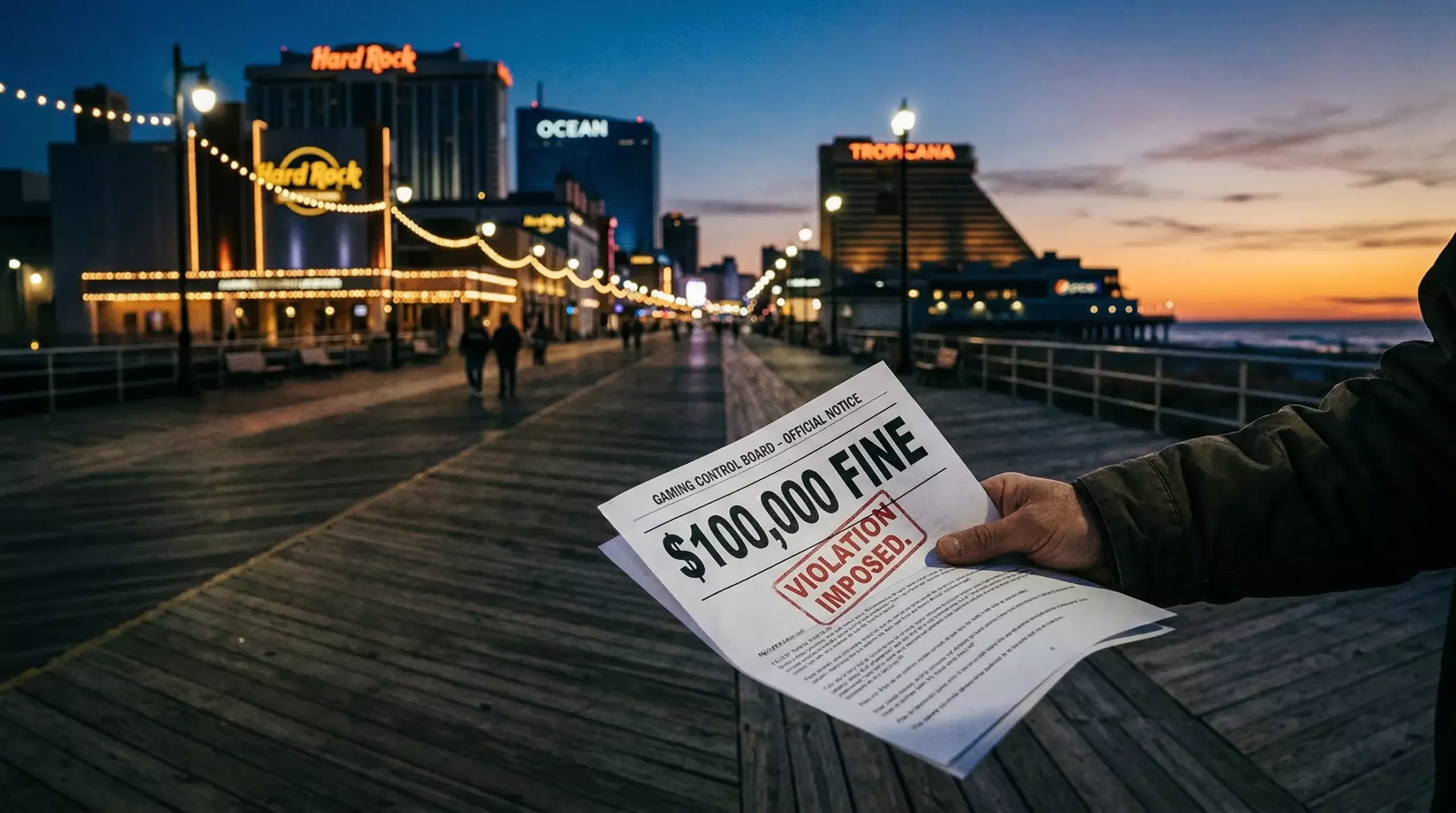
Assembly Bill A5447 establishes some of the steepest financial penalties in the country for sweepstakes casino operations. First-time violators face fines up to $100,000. Repeat offenders can be hit with penalties reaching $250,000. The message is clear: New Jersey built its legal gaming industry through careful regulation and significant investment, and it won’t tolerate unregulated competitors siphoning players and revenue.
This isn’t about moral opposition to gambling. New Jersey embraces gambling in ways most states don’t. The prohibition targets the specific threat sweepstakes casinos pose to a regulated market that generates substantial tax revenue and operates under strict consumer protection requirements. Understanding A5447 means understanding why the state sees sweepstakes operations as fundamentally incompatible with its regulatory model.
Breaking Down Assembly Bill A5447
A5447 takes direct aim at the legal structure sweepstakes casinos use to claim they aren’t gambling operations. The bill explicitly addresses “simulated gaming” and “sweepstakes gaming,” defining these terms to capture the dual-currency model regardless of how operators characterize their services.
The legislation classifies the operation of sweepstakes gaming activities as unlicensed gambling under New Jersey law. This classification matters because it triggers the state’s existing regulatory framework rather than creating an entirely new enforcement mechanism. The Division of Gaming Enforcement, which already monitors licensed online casinos and sports betting operations, gains explicit authority to pursue sweepstakes operators.
A5447 defines sweepstakes gaming broadly to prevent operators from restructuring their services to avoid the law’s reach. The bill covers any activity where participants receive virtual currency, tokens, or similar units that can be used in games of chance and subsequently redeemed for prizes of value. The definition intentionally avoids technical distinctions between Gold Coins and Sweeps Coins—if the overall operation allows players to exchange something for a chance at prizes, it falls within the prohibition.
The legislation addresses both operators and their supporting infrastructure. Companies that provide payment processing, technology platforms, marketing services, or hosting for sweepstakes gaming operations can face penalties alongside the operators themselves. This extended liability framework recognizes that offshore operators are difficult to prosecute directly and instead targets the domestic businesses that enable their operations.
Enforcement authority under A5447 extends to the state Attorney General as well as the Division of Gaming Enforcement. This dual enforcement structure provides flexibility—DGE handles routine compliance matters while the AG’s office can pursue complex cases involving out-of-state entities. The legislation also authorizes cooperation with federal agencies and other states, reflecting the interstate nature of internet-based sweepstakes operations.
Penalty Structure: 0K to 0K Fines
The financial penalties in A5447 represent some of the highest in the nation for sweepstakes casino violations. First offense fines reach $100,000 per violation, with each day of continued operation potentially constituting a separate violation. Repeat offenders face penalties up to $250,000 per violation, creating potential exposure in the millions for operators who persist after receiving initial enforcement notices.
These penalty levels exceed what most states have established for similar violations. California’s AB 831 sets maximum fines at $25,000 with potential imprisonment. Connecticut’s SB 1235 emphasizes criminal penalties including up to five years imprisonment but with lower financial penalties. New Jersey’s approach prioritizes massive financial consequences that can devastate even well-capitalized operators.
The penalty structure reflects New Jersey’s regulatory philosophy. Keith Whyte, former executive director of the National Council on Problem Gambling, has noted that sweepstakes operators are “exploiting an antiquated definition of gambling and an antiquated definition of sweepstakes.” New Jersey’s response treats this exploitation as a serious commercial offense deserving substantial financial consequences rather than merely a regulatory technicality.
Beyond direct fines, A5447 authorizes asset forfeiture for equipment and proceeds connected to illegal sweepstakes operations. Servers, software, and revenue generated from New Jersey players can all be subject to seizure. For operators with any U.S.-based assets, this creates significant exposure beyond the direct penalty structure.
The escalating penalty structure serves a specific deterrent purpose. Operators who might calculate that occasional fines represent an acceptable cost of doing business face rapidly compounding consequences for continued violations. The gap between first and subsequent offense penalties signals that New Jersey expects immediate compliance, not gradual withdrawal.
Why New Jersey Protects Its iGaming Market
New Jersey launched legal online gambling in November 2013, becoming the third state after Nevada and Delaware to offer regulated internet casino games. More than a decade later, the state has built the most successful iGaming market in America. The regulated industry generated billions in gross gaming revenue, with the state collecting hundreds of millions in taxes annually.
Licensed operators in New Jersey pay substantial fees and ongoing taxes for the privilege of serving the market. Initial casino licenses cost millions, while annual licensing fees, regulatory assessments, and gaming taxes consume significant portions of revenue. These operators also invest in compliance infrastructure, responsible gambling programs, and consumer protection measures mandated by state regulations.
Sweepstakes casinos bypass all of these requirements. They pay no New Jersey licensing fees, contribute no gaming taxes, and operate without the regulatory oversight that licensed platforms endure. When a New Jersey resident plays at a sweepstakes casino instead of a licensed iGaming site, the state loses tax revenue while the player loses regulatory protections.
The competitive threat is real. Nationally, sweepstakes casino gross revenue reached $10.6 billion in 2024, according to KPMG analysis. This figure exceeds the combined iGaming revenue from all seven states with legal online casino gambling. Even if New Jersey captures only a fraction of national sweepstakes activity, that represents meaningful displacement of regulated gaming revenue.
The regulated gaming industry has significant political influence in New Jersey. Casino operators, their employees, labor unions, and the communities that depend on gaming employment all have stakes in protecting the regulated market from unregulated competition. A5447 reflects these interests while also serving the state’s revenue objectives.
How Operators Have Responded
Major sweepstakes casino operators began blocking New Jersey access before A5447 even passed. The state’s established regulatory framework and aggressive enforcement history made clear that operating in New Jersey carried exceptional risk. Platforms like Chumba Casino have long excluded New Jersey from their service areas, recognizing that the state’s Division of Gaming Enforcement actively monitors for unlicensed operations.
Smaller operators have been less consistent. Some sweepstakes platforms continued accepting New Jersey players, apparently calculating that enforcement resources would focus on larger targets. A5447’s substantial penalty structure changes this calculus—even small operators face potentially business-ending fines if New Jersey authorities choose to pursue them.
Payment processors have also responded to the regulatory environment. Major credit card networks and payment facilitators have implemented restrictions on transactions coded to sweepstakes gaming operations from New Jersey addresses. These restrictions often operate independently of individual operator decisions, creating additional barriers for players attempting to fund accounts.
The industry response extends beyond simple geoblocking. The Social Gaming Leadership Alliance, an industry group representing sweepstakes operators, has advocated for regulatory frameworks that would allow licensed operation in states currently pursuing prohibition. Jeff Duncan, Executive Director of SGLA, has stated: “We want to be regulated. We want to pay taxes.” Whether this openness to regulation translates into licensed operations in New Jersey remains uncertain, but it suggests at least some operators would prefer working within regulated frameworks to fighting prohibition.
The State’s Calculated Approach
A5447 represents New Jersey’s calculated defense of a regulated gaming market it spent a decade building. The legislation doesn’t reflect anti-gambling sentiment—New Jersey embraces gambling more than almost any other state. It reflects the state’s determination to channel gambling activity through licensed, taxed, and regulated channels.
For New Jersey residents, the practical effect is straightforward: sweepstakes casinos are off-limits. Major platforms already block the state, and A5447 ensures that any operators who might consider entering the market face devastating financial consequences. Players seeking casino-style games have extensive legal options through the state’s numerous licensed iGaming platforms.
The penalty structure in A5447 may influence other states developing sweepstakes regulations. New Jersey’s approach demonstrates that financial penalties can be calibrated to make unlicensed operation economically irrational regardless of potential revenue. States watching the results of various enforcement approaches will note whether massive fines prove more effective than criminal penalties or cease-and-desist campaigns at actually eliminating sweepstakes casino access.